There are three ideas I want to leave you with in this piece...
- Firstly, everyone is a designer and is constantly designing whether they're aware of it or not.
- We are designed by the things which we have designed; the things we create turn around and return the favour.
- Lastly, design apply not only to "things" but also (perhaps more importantly) to ideas.
To start with...
Everyone is always designing!
At it's core, "Design" is just a process of making aesthetic and functional choices. Yes some people go on to specialize, and we call them Designers, but the principles they employ are available to everyone; All you have to do is be sensitive to the way different kinds of people interact with things. Moreover even if someone else has designed your phone (for example), the fact that you ultimately chose to buy it is also a kind of design decision.
In other words, design isn't just about creating products but about shaping your lived experience of the world around you. Even the choice between using one chair or another represents all the possible interactions you might have with one; a chair for work will be very different from one to play video games from.
If nothing else you're designing the parameters of your own life, which you then get to live. What I think this means is that we need to be more aware of the way in which design affects not only us, but the people around us as well.
Being designed by our designs
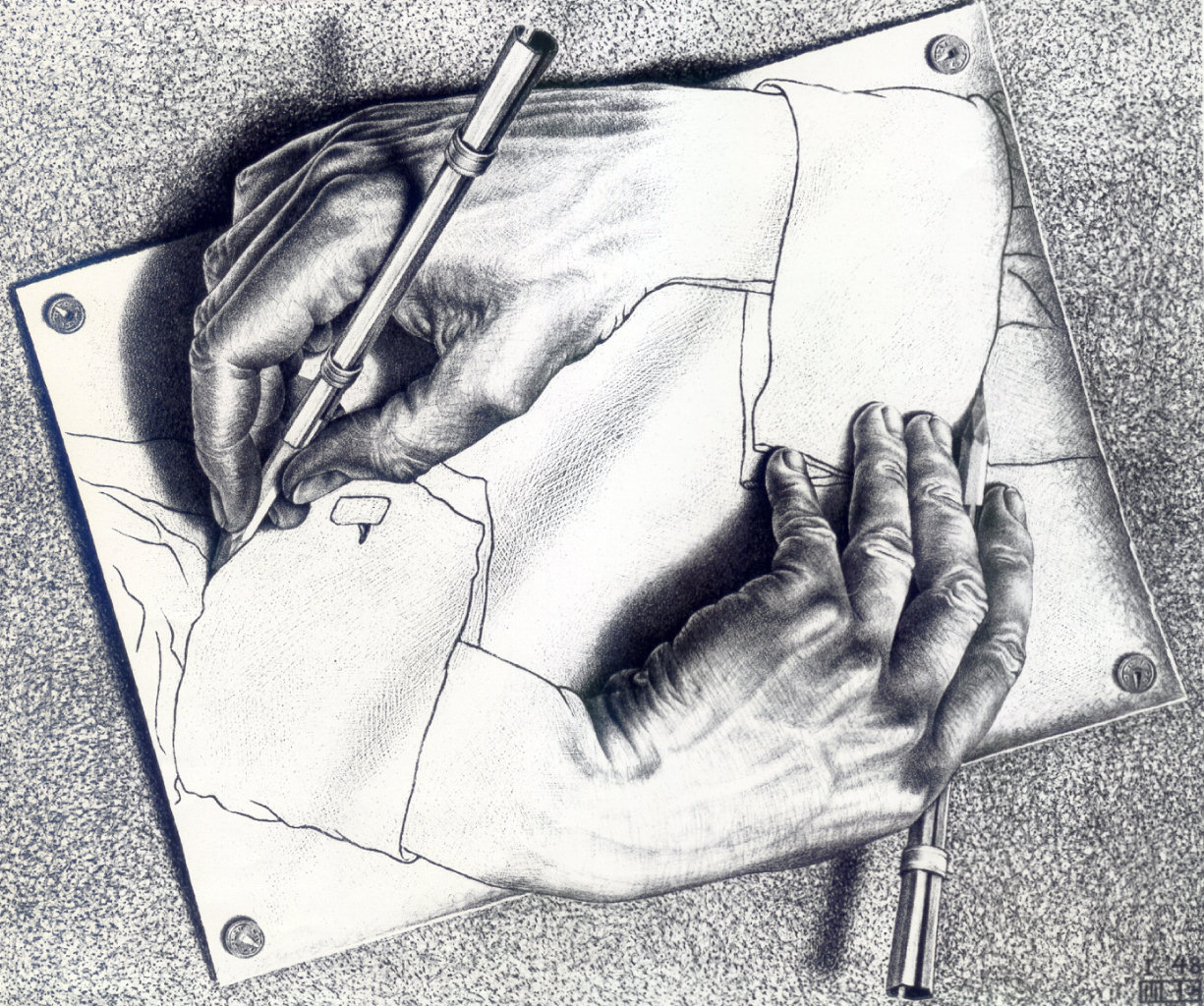
"Just as you grow into the world, the world grows into you. Not only do you occupy a certain place, but that place in turn occupies you..." - Costica Bradatan [1]
There are innumerable examples of how the things we create end up then changing how we act. Storing people's birthdays in a calendar means you stop needing to remember them. Having a camera built into your phone means you take more pictures. And who can say they don't have atleast one friend who's woken up at 4 AM to water their Farmville crops.
It also goes much much further than that into our architecture and the spaces we design: you become quiet when you enter a religious space and you become louder when you enter a pub; the language you learn as a child ends up shaping your personality, which then continues to reinforce itself as you continue to read and speak. Our tools literally change the way we think about the world which then lead us to create new tools to facilitate that new understanding. We're perpetually in this dance with our creations, around and around forever.
In a way this makes sense because of the way our brains are made. Our brains are probably the most remarkable aspects of our species anyway and one of it's main features is it's Neuroplasticity - basically our brain can rewire itself to remap the environment as it changes. As much as we like to think we're masters of our surroundings, the truth is that we're inseparably connected to the universe and our brains respond as such.
The key is to recognize that this is happening all the time and be aware of it. If the things we surround ourselves with ultimately end-up shaping who we are then that's a huge motivation to be more conscious of the design decisions we make everyday. There's an entire design philosophy built around this idea and it's called Ontological Design [2] and it will probably become a guiding framework for a whole generation of designers.
What this also introduces is the idea that we can change ourselves by manipulating our surroundings and our tools. If you want to end a habit, change your environment to make it a little harder to do. If you want to be more productive, try getting a standing desk if you think it will help. The possibilities are endless, and with a little bit of introspection there's so many things to experiment with to try and level-up as human beings.
Ideas can be designed too.
We've discussed the effect that design has on us as individuals and the people around us. But in a way, design affects those who come after as well and thinking about future generations is where things get really trippy.All things have a life-cycle where they are created, mature into prominence and then fade into obscurity. What's amazing is that our ability to create things that different time scales from the ones we occupy. To create a meal is to build something that will last for a few moments. Things like cars or planes or phones live over a few years. Buildings and architecture maintain relevance over a few generations.
Among the things that last the longest though, perhaps our most robust creations are our Ideas. Ideas can survive vast stretches of time, even going beyond their original intent and usefulness and morphing to adapt to the times. But most definitively they have a life-cycle as well. Think about how our notions of the traditional education system are being shaken by the introduction of online education. Think of how traditional models of marriage and family are being challenged by the recognition of the rights of gay people. And on and on, Ideas constantly rise and fall as they battle for our attention.
More long term then, how do our Ideas shape us and what can we do about it? Taking the Education example again, does it make sense that we batch people by their dates of birth and put them through school; is the most important measure of a human really its "production date"? One would think schools were factories that took in children and manufactured employees.
Or take Capitalism, arguably the most all-encompassing Idea we live with. Almost all of economic theory is founded on the notion of people being Rational actors, who act to maximize their self-interest i.e. who are selfish and self-serving. Is it any surprise then to find that the system rewards those who are selfish and self-serving? Several studies show that there are a higher than average number of psychopaths present amongst the CEOs of companies (1 in 25, according to one study). The ideas we create constantly act back on us - casting people into selfish moulds means that over time that's the sort of human being that gets preferentially produced.
Think of the way we think about Sex Education as another example. Traditionally we think that the "right" way to teach children about sex is to emphasize that it's about love and sacrifice. But might that encourage children to not think of themselves when making a choice about whether to engage in sexual activity? After all, sex has been presented as something sacrificial all along. An excellent exploration of this topic can be found here - Because it feels good : Talking to kids about sex.
There are so many examples of this but the scary thing is that we aren't really aware of how fluid things really are; societal norms are presented to us as being these unshakable traditions. And it makes sense in a way because the people who run the show are pretty much aware of how the game works. In a very real way, our lifestyles have been designed for us from the time we enter school till we exit the Rat Race and retire. If we are to regain any sense of agency we must first realize that we have immeasurably more power than we are led to believe.
Closing thoughts
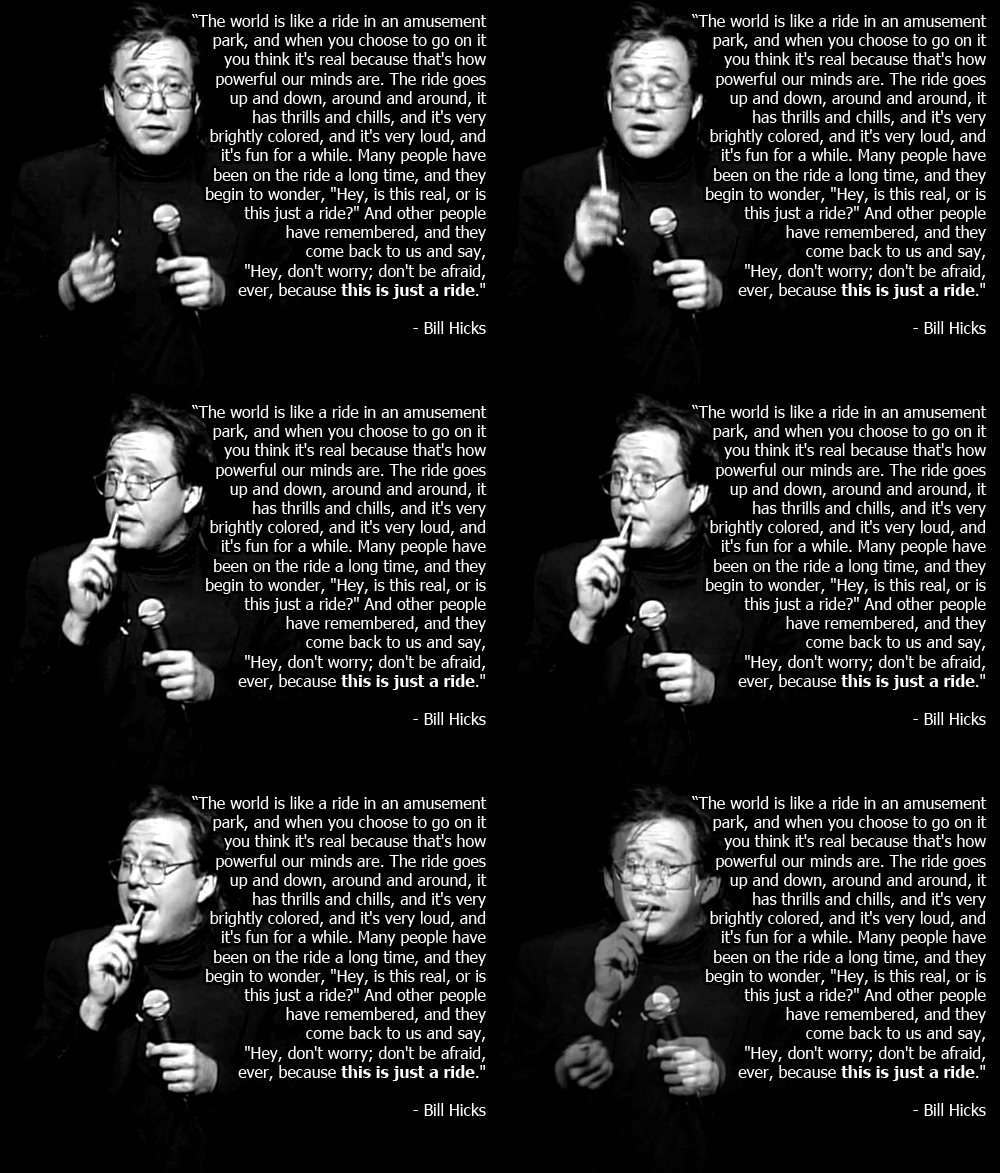
The problem is that it can all get a little overwhelming, especially the sheer "vertigo of freedom" that presents itself if you choose to go down the rabbit hole. To that I say that changing reality is really the simplest thing because you need only worry about yourself. Ultimately it is our linguistic and thought choices that decisively shape our realities!
Even the Bible says (John 1:1) "In the beginning was the Word, and the Word was with God, and the Word was God." In the beginning was the word - in the beginning was Information. Imagine God having a thought, speaking a word and then watching everything come into being.
And Science bears this reality out as well. We think of Life as being something magical but really even the Human Body is a collection of things that are kind of not really alive. It's ultimately just a collection of proteins and chemical reactions that are all just following chemical and psychical laws. But then at the heart of all that non-life is DNA; it's essentially code, it's software that then proceeds to create it's own hardware. Check out The World is made of Language for more on this, or watch the video below.
And Science bears this reality out as well. We think of Life as being something magical but really even the Human Body is a collection of things that are kind of not really alive. It's ultimately just a collection of proteins and chemical reactions that are all just following chemical and psychical laws. But then at the heart of all that non-life is DNA; it's essentially code, it's software that then proceeds to create it's own hardware. Check out The World is made of Language for more on this, or watch the video below.
What this means then is that the act of changing something is quite simply just an honest, whole-hearted choice. We could change our realities in an instant if we really wanted to, it would unfold on it's own pretty much just by the fact that you're still alive and breathing.

Further Reading and References
- [1] Shots of Awe - What is ontological design : http://youtu.be/aigR2UU4R20
- [2] http://www.academia.edu/888457/Ontological_designing
- Shots of Awe - How our creations change us : http://youtu.be/hHCo9U4jxzE
- http://hauntedgeographies.typepad.com/hauntedgeographies/2010/12/ontological-design.html
- https://mehulsangham.wordpress.com/2011/11/26/ontological-design-part-1-cognitive-plasticity
